Bedding · Bedroom comfort
Crisp or Relaxed? Understanding Organic Percale Sheets for a Restful Bedroom
Percale has a particular kind of confidence: cool to the touch, matte in appearance, and crisp without being stiff. For sleepers who prefer a lighter bed, organic cotton percale can be a practical and pleasantly understated choice. The weave matters, but so do fit, laundering, and the rest of the room.
Published November 16, 2026
There is a moment, just after climbing into bed, when the day’s small negotiations give way to a more immediate question: Is this comfortable? The answer may depend on the pillow, the room temperature, or the mind’s refusal to put down its unfinished business. It can also depend on the sheet. A fabric that feels pleasantly cool and light to one sleeper may seem too crisp to another, and the difference between those impressions is not a matter of good taste so much as touch, habit, and personal preference.
Organic cotton percale occupies a distinct place in the landscape of bedding. It is closely woven, generally matte rather than lustrous, and known for a crisp hand that often softens with washing. Its relatively airy character can appeal to people who sleep warm or dislike the enveloping feel of heavier, silkier fabrics. The name itself can sound technical, but the central idea is simple: percale describes a weave, not a fiber. Cotton is the fiber in the sheets considered here; percale is the way those threads are arranged.
That distinction is useful because bedding descriptions can gather impressive-sounding terms like a bedside table gathers books. Organic, cotton, percale, thread count: each tells a different part of the story. Knowing which is which makes it easier to decide whether a sheet set suits the room, the sleeper, and the routine of washing that follows.
What makes percale feel crisp?
Percale is a plain weave, with threads crossing over and under one another in a balanced, regular pattern. This construction gives the fabric its familiar even surface and crisp, almost freshly pressed feel. It is usually less glossy than sateen, another common cotton weave, whose arrangement creates a smoother, more lustrous surface. Neither is inherently better. They simply offer different tactile experiences.
Think of percale as the cool side of a pillowcase in fabric form: clean-lined, breathable in feel, and not especially eager to cling. Its matte finish works quietly in a bedroom, where texture often contributes more than shine. A rumpled percale duvet cover can look at home in a spare, natural room; a carefully smoothed one can bring a crispness to more tailored surroundings. It has range, though not the liquid drape of silk or the soft sheen of sateen.
The word “crisp” can suggest a fabric that is unyielding, but good percale is not supposed to feel like paper. New sheets may seem firmer at first, particularly if they have not been washed. With use and laundering, cotton fibers relax, and the fabric tends to become more familiar against the skin. Still, someone who loves a silky, slippery surface may never find percale compelling. The point is not to persuade every sleeper into one weave. It is to understand the sensation before making a choice.
Breathability and the feel of a lighter bed
Sleep comfort is shaped by a cluster of conditions: room temperature, humidity, bedding layers, sleepwear, and the sleeper’s own sense of warmth. Sheets cannot independently regulate the body or guarantee a better night. But fabric affects how a bed feels, and the breathable, lightweight character associated with cotton percale may suit people who dislike sleeping under a dense or clingy layer.
That makes percale a reasonable option for warm sleepers, for bedrooms that run hot, and for anyone who prefers bedding with a fresh, uncomplicated hand. It can also be useful in a layered bed. A lighter sheet beneath a duvet or blanket lets the sleeper adjust warmth without having to replace the entire bedding arrangement when the season changes. In colder months, the answer may be an additional layer rather than a heavier sheet; in warmer weather, the sheet can remain while the duvet is folded back.
There is no universally ideal temperature or fabric feel. Two people sharing a bed may have opposite preferences, and the same person may want a different arrangement in summer than in winter. A sheet set is one part of the sleep environment, not a substitute for it. Consider airflow in the room, the weight of the duvet, and whether the mattress itself retains heat. A breathable-feeling sheet may help the bed feel less stifling, but it cannot solve every source of nighttime warmth.
Organic cotton: what the label can tell you
“Organic” refers to how the cotton is grown and processed within the scope of a particular standard or certification. It does not, by itself, explain the finished fabric’s softness, durability, or temperature feel. Those qualities depend on several things, including fiber, yarn, construction, finishing, and care. In practical terms, shoppers who prioritize agricultural standards or supply-chain oversight should look for the details behind an organic claim rather than treating the word as a complete description.
For the Sleep and Beyond set discussed here, the product information identifies the cotton as GOTS-certified organic. GOTS—the Global Organic Textile Standard—is a textile certification with requirements that address organic fibers and processing, as well as social and environmental criteria across certified production stages. Certification is useful context, though it should not be confused with a guarantee that a particular sheet will suit every sleeper. A well-documented material can be a meaningful consideration; comfort remains personal.
Organic cotton is also a plant-based fiber, which may matter to people looking to understand the materials in close contact with their skin. But “natural” does not mean maintenance-free, and organic status does not make a textile invulnerable to wear. Washing habits, drying conditions, fit, and how often the sheets are changed all play a part in how long they remain comfortable and presentable.
A practical example: Sleep and Beyond percale
The Sleep and Beyond 100% Organic Cotton Percale Sheet Set is a useful example of the decisions hidden inside a seemingly straightforward purchase. Its product details describe a 270-thread-count cotton percale, GOTS-certified organic cotton, reinforced elastic on the fitted sheet, and sizes ranging from Twin through Split King. The fitted sheet is listed with pockets designed for mattresses up to 18 inches deep, an important specification for anyone whose mattress is taller than standard or sits atop a substantial topper.
Thread count is often asked to do more work than it can. It counts the number of threads in a square inch of fabric, but it is not a reliable shortcut to softness or quality on its own. Fiber quality, yarn construction, weave, and finishing matter too. With percale, the defining experience is the weave’s crisp, matte character, not a race toward the highest possible number. A 270-thread-count listing offers a point of comparison, but it cannot tell you exactly how the sheets will feel in your own room.
The product information also notes that the set is machine washable and packaged in reusable and biodegradable materials. The Split King configuration includes a flat sheet, two Twin XL fitted sheets, and two pillowcases; other sizes have their own fitted-sheet dimensions and pillowcase counts. Those details are less glamorous than the promise of a cool, clean bed, but they are often the difference between a purchase that works and one that becomes a wrestling match at laundry time.
For a reader considering the set, the sensible questions are concrete: Does the chosen size match the mattress? Is the mattress depth within the fitted-sheet pocket limit? Does the feel of percale suit your preferences? Are you comfortable following the care directions? The product description can help answer some of these questions; the question of tactile preference is best judged by experience, where available, rather than by any adjective in a catalog.
Fit: the quiet foundation of comfort
A sheet can have an appealing hand and still be maddening if it slips off a corner at three in the morning. Before choosing a set, measure the mattress, including any topper that will remain beneath the fitted sheet. Check its length and width, then measure its depth from the base to the top surface. Mattress labels do not always tell the whole story once a topper, protector, or pad has been added.
Pay attention to the fitted sheet’s pocket depth and the manufacturer’s recommended mattress range. A sheet that is too shallow may pull away; one that is excessively loose may bunch. Elastic construction and reinforced corners can support a more secure fit, but accurate sizing remains essential. For an adjustable bed, a Split King set is designed around two Twin XL mattresses rather than a single King mattress, so it is worth checking the exact configuration rather than relying on the word “King” alone.
Flat sheets matter, too, though their dimensions are less likely to make themselves known until bedtime. If you like to tuck a generous amount beneath the mattress, check the size chart. If you share a bed and each person has a different preferred amount of coverage, a larger flat sheet may offer a little more room for negotiation—though no sheet, however generous, can settle the question of who has taken all the blankets.
Washing, drying, and the slow softening of cotton
The care label is not an afterthought. Washing sheets regularly is part of maintaining a clean sleep surface, and a fabric that fits your laundry routine is more likely to remain in steady rotation. The Sleep and Beyond percale set is described as machine washable. Before its first wash, read the current product care instructions; manufacturers may update guidance, and precise washing details should come from the label rather than assumption.
As a general approach for cotton bedding, avoid needless harshness. Use an appropriate detergent, wash according to the care instructions, and do not overload the machine so tightly that the fabric cannot move freely. A dryer can be convenient, but excessive heat may contribute to wear or shrinkage over time. If the label permits tumble drying, a moderate setting and prompt removal can help limit deep creasing. A little rumple is part of percale’s unceremonious charm; there is no requirement to iron a bed that is going to be slept in.
New sheets may feel firmer than expected, and repeated laundering can soften them. That does not mean washing them aggressively will hurry the process in a useful way. A measured routine is kinder to the fabric and easier on the household. If you are accustomed to sateen, flannel, or a brushed finish, give yourself a few nights to decide whether the change feels refreshing or simply too crisp. Bedding is intimate by definition; first impressions are informative, but habits take a little time to form.
Percale in a calm, nature-minded bedroom
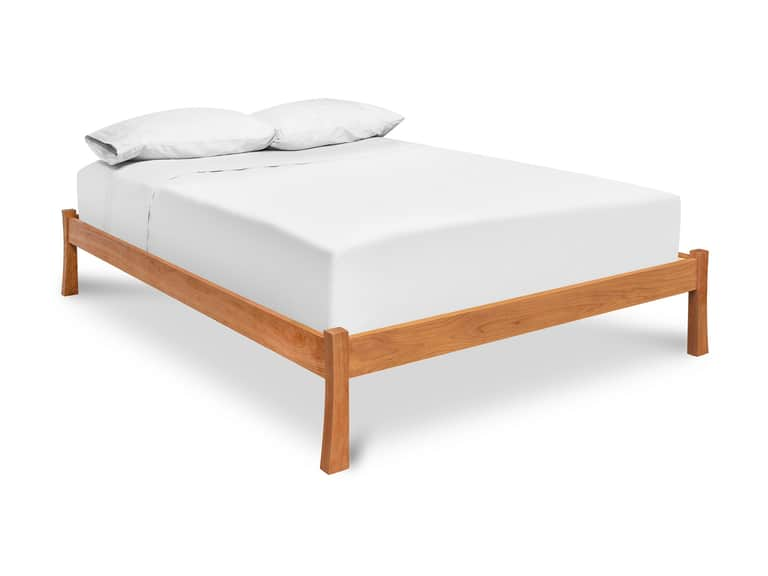
In a bedroom designed around natural materials, percale has an appealing restraint. Its matte surface does not compete with wood grain, woven rugs, or the small irregularities that make a room feel lived in. White, beige, and muted green sheets can create a quiet foundation, while a printed duvet cover or textured blanket supplies a more personal note. A restrained palette need not be austere: variation in weave, tone, and weight can give a room depth without turning the bed into a display.
That kind of design is less about assembling a flawless picture than about creating a place that is easy to inhabit. A neatly made bed can be restful to look at, but the measure of a bedroom is not whether it resembles a showroom at noon. It is whether the room supports the rhythms of real life: sleep, reading, opening a window, folding a blanket over a chair, and putting the sheets through the wash without requiring a ceremony.
Organic cotton percale can fit within that outlook because it brings together an identifiable material, a straightforward construction, and a practical care routine. It is not automatically the most sustainable choice in every circumstance, nor does a natural fiber alone define a healthy bedroom. The useful approach is to consider the whole picture: how the textile was made, how long it is likely to be used, whether it can be cared for appropriately, and whether it genuinely feels good enough to keep.
How to decide whether percale is for you
If possible, begin with the sensation you already know you enjoy. Do you like crisp shirts, cool pillowcases, and cotton that feels light rather than slick? Percale may be promising. Do you prefer a smooth, draped, slightly lustrous surface? Sateen or silk may be more appealing. If you tend to sleep warm, the airy impression of percale may be worth considering, especially when paired with suitable layers and a comfortable room temperature.
- Look at the weave. Percale is generally crisp and matte; sateen is typically smoother and more lustrous. Compare the sensations, not just the labels.
- Check the fiber and certification. Confirm what the sheet is made from and what certification, if any, is specified.
- Measure the bed. Include the mattress topper and protector when checking fitted-sheet depth.
- Read the care instructions. Choose a fabric and routine that make sense for how often you wash bedding.
- Expect personal preference to matter. Breathability, softness, and crispness are experiences, not universal guarantees.
There is a certain relief in a bed that does not announce itself. The sheet stays put; the fabric feels agreeable; the room is cool enough; the duvet is neither too much nor too little. Organic cotton percale will not arrange every element of that scene, but it can provide a reliable, light-feeling layer for those who like its character. The Sleep and Beyond set offers specific details—organic certification, percale construction, mattress-depth guidance, and machine washability—that make it easier to assess the practical side before deciding.
In the end, “crisp or relaxed?” is not a test with a correct answer. Percale begins on the crisp side and, with use, can grow softer and more at home in the bed. Whether that progression sounds appealing depends on the sleeper. A restful bedroom is not made by choosing the most impressive specification; it is made, in part, by noticing what feels right night after night. For some, that is the clean, breathable touch of percale. For others, it is something smoother. The good news is that comfort, unlike thread count, does not need to be measured in numbers.